

El Niño risk shapes Ag outlook
Late-May rain lifted farm confidence, but El Niño risk keeps pressure on crops, cattle and dairy this winter.

What’s Happening?
Late-May rain has given agriculture a stronger start to winter after a dry and uncertain opening.
The rain helped winter crops establish across southern Queensland and northern New South Wales. It also reduced selling pressure in cattle markets, giving producers more room to hold stock.
Bendigo Bank Agribusiness said the agricultural sector received a clear confidence boost from the rain. The report said the focus now shifts to turning the early break into yield.
Livestock markets also stayed strong into June. Tight supply supported sheep meat and wool prices, while cattle markets lifted as improved seasonal conditions reduced local supply.
Dairy farmers face a different challenge. New season farmgate milk prices held few surprises, with steady incomes and higher input costs keeping pressure on margins.
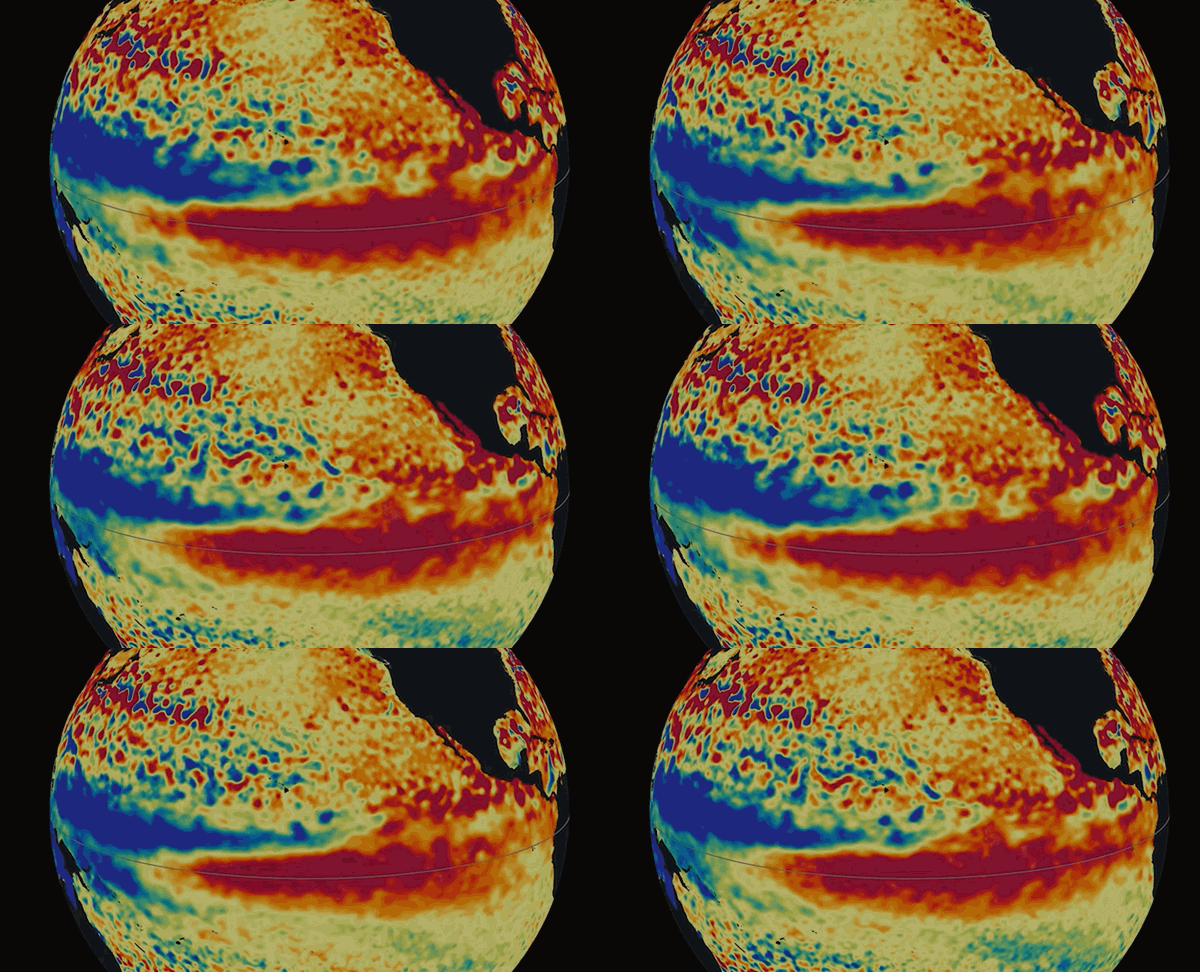
Climate risk is also moving into focus. The World Meteorological Organization said El Niño conditions are developing in the tropical Pacific.
University of Melbourne climate scientist Dr Mandy Freund said a “monster El Niño” risk should not be treated as a guaranteed drought.
She said “El Niño is a risk factor, not a forecast.”
Why It Matters?
Queensland farmers now have a better seasonal base, but the pressure has not disappeared.
For grain growers, the May rain improved confidence after a nervous start. Winter rainfall will decide whether that early break becomes yield.
For cattle producers, better feed conditions reduced forced selling. That tightened supply and shifted short-term market power back towards producers.
For horticulture, the pressure is coming from costs and planting decisions. Higher fertiliser, freight and diesel costs are reducing vegetable planting intentions.
For dairy, steady farmgate milk prices may not be enough. Higher input costs mean margins are expected to stay tight in the 2026/27 season.
The El Niño signal adds another layer of risk. It may lift the chance of drier conditions, but the final impact will depend on several climate drivers.
Local Impact
Southern Queensland growers are among the clearest winners from the late-May rain.
The rainfall helped dry-start crops and cooled some northern grain prices. Brisbane wheat and feed barley came off early-May highs after the rain reduced buying urgency.
In cattle markets, improved seasonal conditions reduced the need for immediate sales. Processor competition increased as cattle availability tightened.
For households, the impact may appear later in winter. Bendigo Bank Agribusiness said Queensland capsicums were coming through in May, alongside regular winter vegetables.
Both were sitting below long-term price averages during May.
That may change if reduced vegetable plantings flow through. Tighter supply is expected to become clearer from late July onwards, with pressure likely from August.
Queensland dairy production was also stronger for the season to April. Even so, steady milk prices and higher costs mean many farms are still facing squeezed margins.
By The Numbers
Queensland’s wheatbelt averaged 57 millimetres of rain in May, about 278 per cent of median. That gave winter crops a stronger establishment window after a dry start.
Queensland export cattle grids lifted by 20 to 40 cents a kilogram across several categories during May. The rise showed how quickly cattle prices can move when supply tightens.
The WMO El Niño update puts the chance of El Niño at 80 per cent for June to August 2026. It says the chance of conditions continuing to at least November is near or above 90 per cent.
Zoom In
The ag outlook is now split between relief from late rain and concern about what comes next.
Cropping: Late-May rain reset confidence across southern Queensland and northern New South Wales. The Bendigo Bank Agribusiness June commodity update said the Queensland wheatbelt averaged 57 millimetres in May, while the New South Wales wheatbelt averaged 72 millimetres. Those falls gave dry areas a clear lift for planting and establishment.
Wheat: Brisbane cash wheat fell around 11 per cent from its early-May peak. The report said the fall did not mean the market had weakened. It meant rain had removed the urgency that pushed prices higher. Even after the pullback, Brisbane and Newcastle wheat stayed about 16 per cent above a year ago.
Barley: Feed barley followed the same northern rain pattern. Brisbane and Newcastle values had reached 20 to 25 per cent above year-ago levels in early May. They later fell roughly 12 to 13 per cent from those highs as new-season confidence improved.
Canola: Canola moved against the cereal trend. Bendigo Bank Agribusiness said prices stayed supported by a steady global oilseeds market. Canola also remained a strong option for many growers because of recent profitability.
Cattle: Improved seasonal conditions across eastern Australia shifted short-term market power back towards producers. Widespread rain reduced the need for immediate cattle sales. National yardings eased, cattle availability tightened and processors competed harder for stock.
Queensland cattle prices: Queensland export grids lifted by 20 to 40 cents a kilogram across several categories in May. Restocker and backgrounder activity also strengthened, helping weaner and feeder cattle prices in several regions.
Horticulture: Citrus season is moving towards peak harvest. Quality is mostly favourable across southern growing regions, with high sugar levels and strong colour reported. Smaller fruit sizes may still affect pack-outs and grower returns.
Citrus exports: Australian citrus growers face stronger competition from South Africa in key Asian markets. Bendigo Bank Agribusiness said improved South African quality may affect export pricing for Australian growers in coming months.
Vegetables: Higher input costs are shaping planting decisions. The AusVeg survey cited in the report found median fertiliser costs had risen 51 per cent since the start of the conflict referenced in the report. Freight costs were up 35 per cent, while diesel costs were up 61 per cent.
Vegetable supply: Growers said they had recovered only 17 per cent of higher costs on average. Almost a quarter of surveyed growers were looking to reduce planting schedules. Those cutting planted areas had reduced them by an average of 23 per cent. Reduced availability is expected to become clearer from late July onwards.
Cotton: Dry conditions across Queensland and New South Wales are driving strong demand for cottonseed as feed. Demand is strongest from the feedlot sector, where cottonseed is valued for protein and fibre.
Cotton production: ABARES reported a 23 per cent fall in Australian cotton crop production this season. That included an 11 per cent drop in Queensland and a 22 per cent fall in New South Wales.
Dairy: New season farmgate milk prices were announced by the 1 June 2pm deadline. Bendigo Bank Agribusiness said many farmers found the stable offers disappointing but understandable. In the southern market, prices ranged from around $8.50/kg MS to more than $10/kg MS.
Queensland dairy: Queensland milk production was up 3.2 per cent for the season to April 2026. Even so, steady incomes and higher costs are expected to keep pressure on farm margins.
Sheep: Average lamb carcass weights reached 25.8 kilograms per head in the March quarter. That was the highest quarterly average on record. Strong lamb prices and comparatively cheaper feed encouraged growers to put extra weight on stock.
Wool: The AWEX Eastern Market Indicator started June at 1,964 c/kg. That was 63.8 per cent higher year-on-year and the highest level since March 2019. Bendigo Bank Agribusiness said shrinking supply remains a key driver.
Zoom Out
The climate outlook is serious, but it needs careful reading.
The World Meteorological Organization said unusually warm Pacific waters are feeding the development of El Niño. It said El Niño typically lifts global temperatures and affects rainfall patterns, increasing the risk of extreme weather.
UN Secretary-General António Guterres said “The science is clear: El Niño is arriving on our doorstep in the coming months with 90% certainty. The world must treat it as the urgent climate warning it is. El Niño conditions will pour fuel on the fire of a warming world. Impacts will hit even harder, travel even farther, and cross borders with devastating speed. The only effective response is climate action equal to the crisis - ending the addiction to fossil fuels, accelerating the shift to renewables, protecting the most vulnerable, and delivering early warning systems for all.”
WMO Secretary-General Celeste Saulo said “We need to prepare for a potentially strong El Niño event - which will exacerbate drought and heavy rainfall and increase the risk of heatwaves both on land and in the ocean. The most recent El Niño, in 2023-24, was one of the five strongest on record and it played a role in the record global temperatures we saw in 2024.”
She also said “The WMO community will be carefully monitoring conditions in the coming months to inform decision-making by governments, humanitarian agencies and climate-sensitive sectors. Advance seasonal forecasts and early warnings are vital to save lives and cushion the impact on our economies and our communities.”

For Australia, Dr Freund said the signal should not be read as a simple one-way forecast.
El Niño is often linked to drier-than-average conditions, especially in eastern Australia. But some strong El Niño events have still delivered near-average rainfall across large parts of the country.

That matters for Queensland because a strong El Niño does not automatically mean a severe dry period.
Bendigo Bank Agribusiness said the Bureau of Meteorology's three-month rainfall outlooks point to a higher chance of drier conditions across most agricultural regions. That makes follow-up rainfall the key issue for winter and spring planning.
The 2026/27 Federal Budget also placed climate, energy sovereignty and supply chain resilience on the agricultural agenda.
Bendigo Bank Agribusiness said the $1.1 billion, 10-year Cleaner Fuels Program was included in the Budget for the first time. The report said the program could support domestic renewable fuel production and create more demand for local canola.
However, the report also noted funding changes that may affect some climate and drought preparedness programs.
What To Look For Next?
The next stage depends on follow-up rain through winter.
Southern Queensland growers now have a stronger start, but yields still need winter moisture. Cattle supply will depend on whether producers keep holding stock or sell into stronger prices.
Vegetable supply pressure may become more visible from late July and August. Dairy price step-ups may come from lower-ranked offers, but broad rises appear less likely before mid-season.
Seasonal updates from the Bureau of Meteorology will guide planning through winter and spring.